Weather conditions can change rapidly on the escarpment. Mist, wind, and sudden temperature drops are common.
Dual The Weather of the Mountain
Climate, Altitude, and Life on the Escarpment
Perched high on the Mpumalanga escarpment at over 1,600 metres above sea level, Kaapsehoop experiences a mountain climate distinctly different from the Lowveld below. Weather here is shaped by altitude, mist belts, and seasonal atmospheric movement, often changing rapidly and dramatically within the space of hours.
These conditions have influenced not only daily life, but also movement, settlement patterns, health, agriculture, mining activity, and the character of the village itself.
Mist and Visibility
Mist is one of Kaapsehoop’s defining features. Most common between September and March, it can roll in without warning, cloaking the village, forests, and escarpment edges in silence.
Visibility can reduce dramatically within minutes, affecting travel, hiking, and access routes. Historically, this mist shaped how people moved across the escarpment and reinforced Kaapsehoop’s reputation as a place of isolation, unpredictability, and refuge.
Rainfall Patterns
Rainfall occurs mainly during the summer months, with December and January typically the wettest. These rains feed the surrounding grasslands, wetlands, and forest systems, replenishing streams such as Battery Creek and sustaining the high-altitude ecology of the mountain.
Rainfall intensity can vary sharply from year to year, with periods of heavy downpours followed by drier seasons — a pattern typical of escarpment climates.
Winter Conditions: Frost and Snow
Winter on the mountain (June–July) brings heavy frost, icy mornings, and occasional snowfall — a rare phenomenon in South Africa.
Frost regularly blankets fields and rooftops in white during the early mornings, affecting vegetation, water pipes, and daily routines.
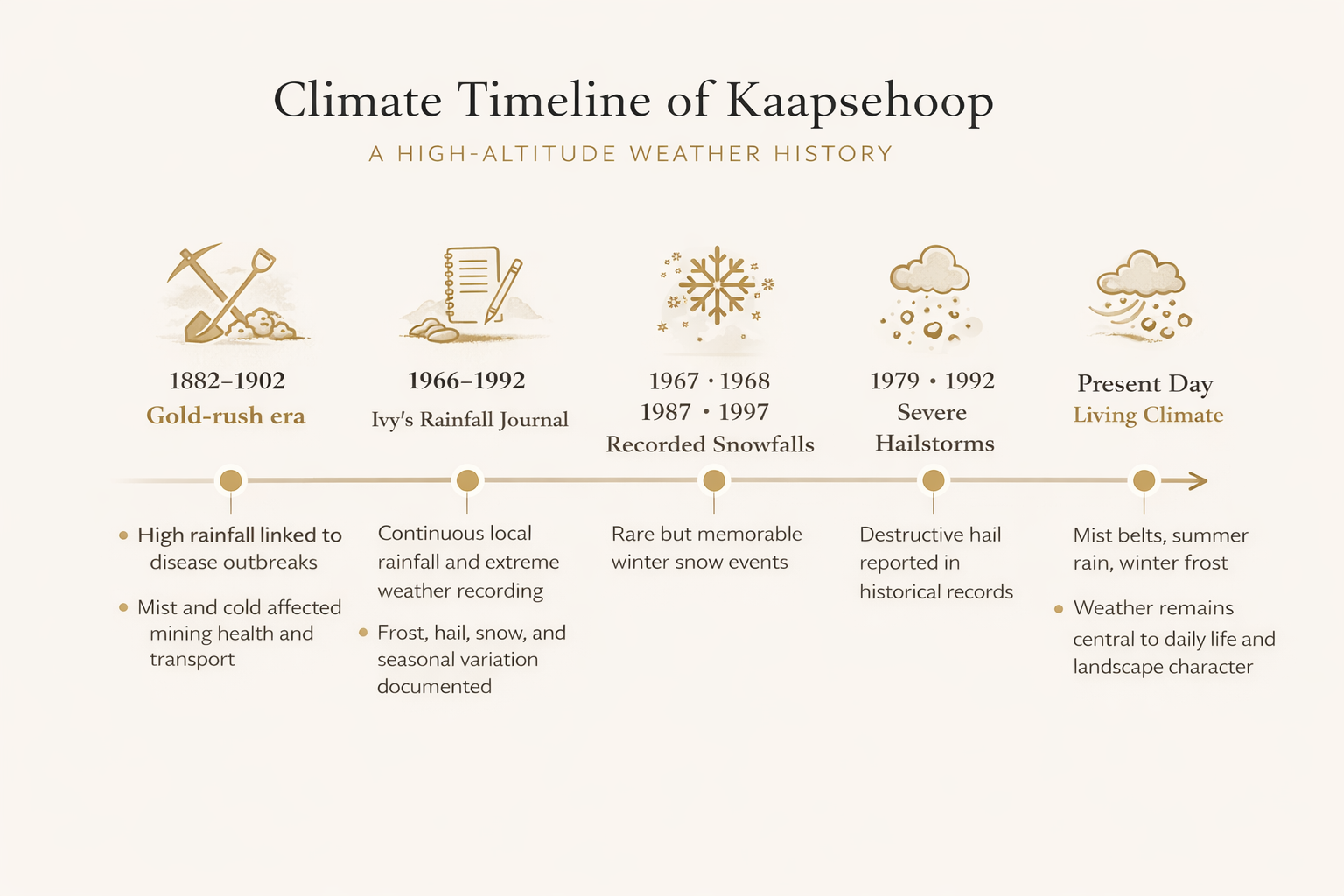
Several recorded snowfalls have been documented in Kaapsehoop, including:
-
14 July 1967
-
2 June 1968
-
21 July 1987
-
28 May 1997
These events remain vivid in local memory and underline the severity of winter conditions at altitude.
Extreme Weather Events
Hailstorms and strong winds are not uncommon on the escarpment and can arrive with sudden intensity. Historical records note several destructive hail events, including storms on:
-
14 October 1979
-
13 April 1992
In contemporaneous accounts, hailstones were reported as being as large as pigeon eggs, causing damage to vegetation and structures and leaving lasting impressions on the landscape.

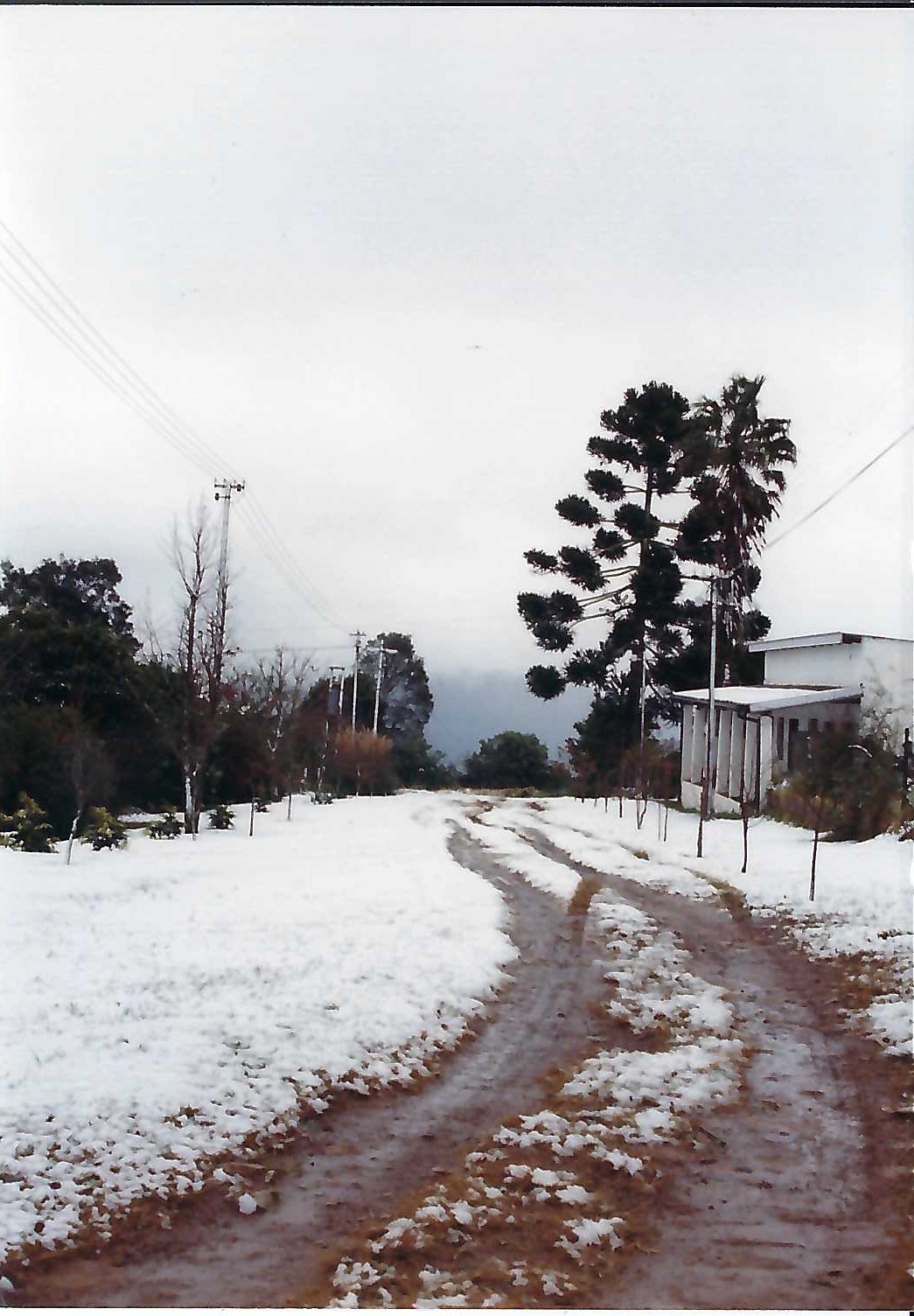
Ivy’s Rainfall Journal (1966–1992)
From 1966 to 1992, Ivy and Tommy — long-time residents of Kaapsehoop — kept detailed handwritten records of rainfall, snow, frost, hail, and extreme weather events on the mountain.
These journals provide a rare, ground-level climate record spanning nearly three decades and are considered primary source material. They capture not only quantities of rainfall, but also lived experience: sudden storms, unusual cold snaps, and long wet seasons remembered by those who endured them.
Selected entries and the complete rainfall log are preserved in the Kaapsehoop Heritage Archive and are available to members for research and heritage purposes.
A Mountain Climate, A Living Influence
Kaapsehoop’s weather is not a backdrop — it is an active force that continues to shape life on the mountain. From mist-shrouded mornings to frost-white winters and dramatic summer storms, climate has influenced how people arrived, stayed, struggled, and endured here.
Understanding the weather of Kaapsehoop is essential to understanding the village itself.