
War and Recovery
1899–1924 · The Anglo-Boer War, occupation, and the years of rebuilding.
A mountain settlement passing through war, occupation, recovery and renewal — its small-village life set against larger events that, for the most part, went around it rather than through it.
By 1899 Kaapsche Hoop was a small mining settlement on the upper edge of the De Kaap escarpment, its population long fallen from the rush-year peak. Over the next quarter-century it passed through war, occupation, recovery and renewal — its small-village life set against larger events that, for the most part, went around it rather than through it.
A village on a war footing — 1898–1899
The build-up was on paper for a year before war was declared. Through 1898 and 1899 the Barberton and Lydenburg officers requested rifles and ammunition for the Kaapsche Hoop burghers, compiled the lists of dienstpligtige burgers — men liable for service — and repaired the Government Powder Magazine. On 27 September 1899 the Kommandant of Lydenburg asked for two hundred Mauser rifles for Barberton and Kaapsche Hoop together. Fourteen days later, on 11 October 1899, the Anglo-Boer War began.
Behind Boer lines — 1899–1900
For nearly a year the village sat behind Boer lines and continued its Republican administrative life. Assistant-Commandant Paul Maritz filed reports on the guarding of the Eastern Railway line; foreign residents applied for passports out; and the civilian mine managers came and went. Through it all the State School stayed open. In one of the most striking wartime documents from the village, headmaster P.J. Kloppers recorded that he remained at his post only by formal order of the Assistant-Commissioner of the Boer forces, performing both government service and teaching. The schoolmaster was kept at his desk by order.
The British advance — September 1900
The British turn came in the second week of September 1900 — the telegraph reaching the plateau before the infantry. At dawn on 13 September 1900 General Hutton’s Mounted Infantry seized the village; the Boer detachment had withdrawn shortly before. On 14 September Pole-Carew’s XI Division marched in, and a Reuters telegram was filed from the village that same day.
This place was occupied by General Pole-Carew to-day.Reuters dispatch, Kaapsche Hoop, 14 September 1900
A telegraph outpost
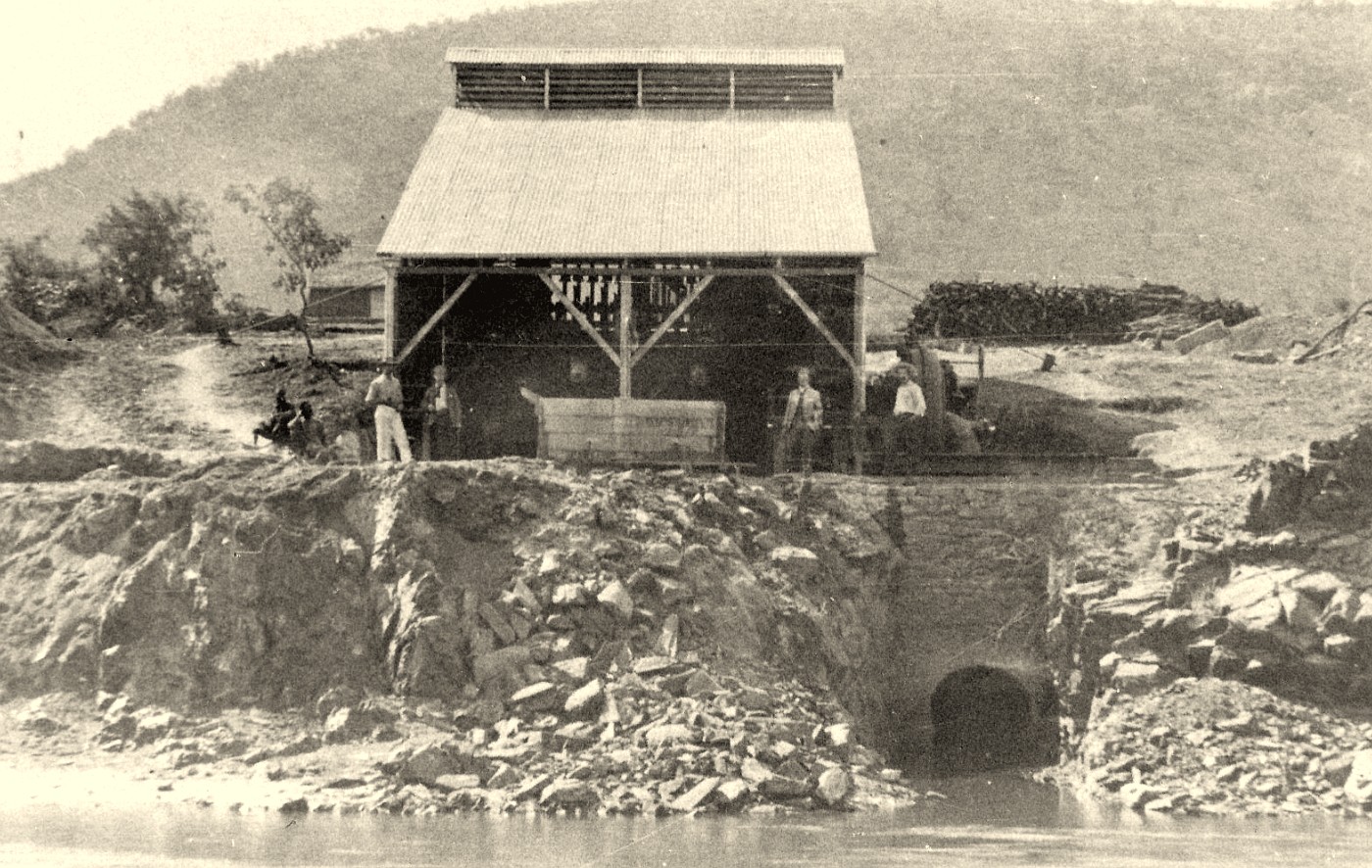
Kaapsche Hoop was held for roughly twenty months, to the Peace of Vereeniging, as a forward outpost of the Barberton garrison — not an independent base. The published telegraph maps of Lt Col Hippisley name it station Kaapsche Hoop K1, ringed by Signal Hill, Scot’s Camp, a commandant’s position, a hospital and six numbered defensive Posts along the escarpment edge. It served as a telegraph and observation node controlling the De Kaap–Komati corridor, continuously manned by rotating detachments.
Kaapsehoop Heritage Archive
Soldiers remembered here
Three named British soldiers died at Kaapsche Hoop in the war years — all from disease, not combat: Private W. Cooke of the 1st Liverpool Regiment (dysentery, April 1901); Sapper Harry Baskerville of the Royal Engineers Telegraph Division (May 1901); and Private J. Lydon of the Northumberland Fusiliers (July 1901). A civilian mine manager, Charles Eustace, died of enteric fever at his post in February 1901. Their burial ground is the village’s most direct surviving link to the period; the full detail is kept on the dedicated cemetery page.
Recovery under the Crown Colony — 1902–1910
By late 1901 the village had become a recruiting centre for the National Scouts, and the Peace of Vereeniging was signed on 31 May 1902. The first Crown Colony years settled the unfinished business of war: the school-building contract was closed, a new court jurisdiction under the Resident Magistrate at Barberton was established, £613 was authorised to repair the government buildings, and Kaapsche Hoop was classified as one of the three detached stations of the Barberton District. The SAR institutions survived the war substantially intact — the same headmaster, the same doctor, the same families on the same stands.
The Association and the nugget — 1905
In September 1905 the inaugural South African meeting of the British Association for the Advancement of Science touched the village: its Kaapsche Hoop correspondent, T.J. Ross, described it as “the first proclaimed township of the Kaap Goldfields, founded in 1882”, gave the 1905 population as about three hundred, and recorded the 1888 discovery of the 36-lb “Kruger Nugget” at the village. Alluvial digging was the chief occupation; tobacco-growing the reserve.
The Diggers’ Charter and the sanatorium — 1913–1918
In 1913 a visit by the Under-Secretary for Mines produced a six-point Diggers’ Charter — asking, among other things, for a phthisis sanatorium, water laid on to the village, and a Godwan River bridge. Construction of the Phthisis Sanatorium — a settlement for miners suffering silicosis from the Witwatersrand reefs — began in 1914, using the cool plateau air as a health asset. It was one of the shortest-lived of the village’s institutions: four years of building, a few of use, and a slow disposal of its houses that ran to 1926.
Notice 1727 — 17 October 1924
The largest single-day land event in the village’s twentieth century came on 17 October 1924. Under Government Notice No. 1727, the Governor-General-in-Council approved thirteen Kaapsche Hoop stand sales — converting long-standing informal occupation into formal freehold title for the founding families: the Lambourns, the Tophams, the Nels, the Gouws and others. In the same twelve months a geologist, Wal Hall, filed the first reports on asbestos near Kaapsche Hoop — the founding documents of the industry that would carry the village into its next era.
Sources: Transvaal Archives (SAR and Crown Colony correspondence, 1898–1924); Hippisley, History of the Telegraph Operations (HMSO, 1903); Reuters dispatches (September 1900); War Office casualty lists (1901); the BAAS 1905 Handbook (T.J. Ross); and Government Notice No. 1727 (1924). The soldiers’ biographies, the escarpment fortifications and the sanatorium dockets are treated on the project’s dedicated cemetery and military-history pages. Detailed citations are held in the project research file.